
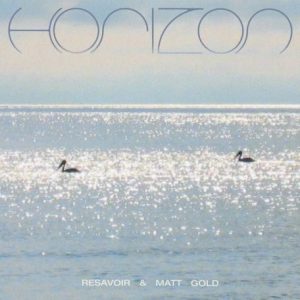
 There’s a certain kind of light that hits in the late afternoon, just before the sun slips away at the end of the day, and Horizon lives entirely in that golden hour. Released by International Anthem, Horizon is a collaboration between Chicago-based trumpeter Will Miller (of Resavoir) and guitarist/composer Matt Gold. Their 10-track album is a quietly radiant exploration of texture, warmth, and mood. Horizon began with the two musicians paying tribute to their love of Brazilian music of the 60s and 70s yet expanded to something larger. Miller and Gold, longtime friends and musical co-conspirators, approach Horizon not like bandmates but like painters sharing a canvas.
The opener, “Canopy,” gently sets the tone: nylon-string guitar shimmers over a bed of…
Category: jazz
 Even on paper, this is such an interesting trio. Ava Mendoza is a brilliant and versatile guitarist who feels comfortable playing heavy rock, blues, jazz, improv, and experimental music. One could say the same about violinist gabby fluke-mogul, though she is centered more in the improv / experimental space. Carolina Pérez, on the other hand is a death metal drummer. Sounds good, right?
Mama Killa is the type of album that you might expect someone like John Zorn to put together. Get a bunch of accomplished musicians together in a room, and unleash them. Indeed, you cannot help but think of Zorn’s Simulacrum (Matt Hollenberg, John Medeski, and Kenny Grohowski) or unrecorded trio Bladerunner (Zorn, BIll Laswell, and Dave Lombardo) when considering…
 Jazz trios featuring a horn, bass and drums get right to the core of musical expression. With, most commonly, a saxophone — see Sonny Rollins’ blueprint for the horn and trio setting, the 1957 Contemporary Records album Way Out West — the music flows freely. The players do not need to chase chords around. The result is a stretching of the melodies with freewheeling rhythmic finesse.
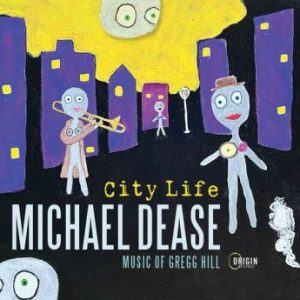
Trombone, bass and drums outings are rare, but Michael Dease goes for it on CD 1 of City Life: Music of Gregg Hill , his third outing in which he tips his hat to the composer. Bassist Linda May Han Oh (aka Linda Oh) and drummer Jeff Tain Watts are his rambunctious fellow city dwellers. On CD 2, Dease again employs Oh and Watts, with the addition of pianist Geoffrey Keezer…
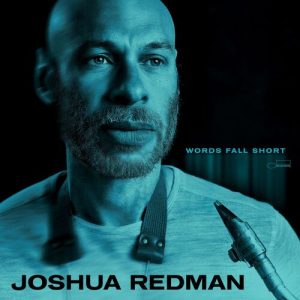 Charismatic saxophonist and composer Joshua Redman assembles a new rhythm section of young players for his latest quartet outing, Words Fall Short, following his vocali-infused album Where Are We (2023). Superior to Redman’s previous effort, the album comprises eight carefully curated pieces, three of which are elevated by influential guest appearances.
“A Message to Unsend” has a delicate essence, shaped by pianist Paul Cornish’ arpeggiated style, consonant articulations by Redman and bassist Philip Norris, and the sensitive drumming of Nazir Ego. There’s something classical, even bolero-infused in the works, and the music flows with hymn-like, breezy tones, showcasing solos from Cornish and Redman, which unfold…
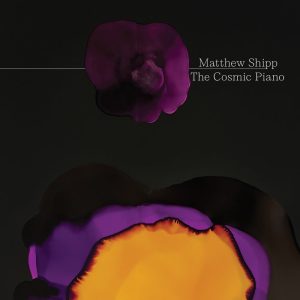 Having garnered some of the most excited reviews of his career with last year’s trio record New Concepts in Piano Jazz, maverick pianist Matthew Shipp pivots to his other most well-known concept: an improvised solo record. Unlike, say, Keith Jarrett, Shipp prefers to record in the studio, and avoids being (overtly) influenced by piano lessons or classical training. If anything except his own shimmering imagination rules The Cosmic Piano, it’s the twin towers of Cecil Taylor and the blues.
Like Taylor, Shipp wanders all over the keyboard to seemingly directionless purpose; also like the avant-garde piano demon, deep listening reveals a method to the mania. Unlike Taylor, Shipp doesn’t try to dismantle the keyboard with hurricane speed – indeed, if anything Shipp…
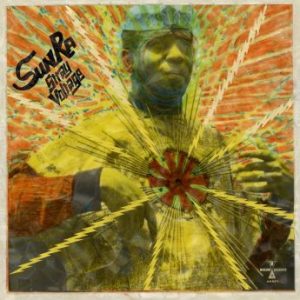 These tracks capture Sun Ra’s electronic peregrinations during the 1970s and ’80s. The Arkestra occasionally makes a cameo appearance but Ra commands the spotlight, not so much composing music as painting soundscapes with electronic keyboards.
In the collection we’ve titled Stray Voltage, Ra is not so much composing music as painting soundscapes with electronic keyboards. Ra doesn’t simply play these consoles — he attacks, cajoles, and pounds them. He upends and transports them where they weren’t built to go. Sometimes they fracture under his assault. He steers them into the zone of intimacy and combat. They emit whirrs, hums, jolts and squiggles, crowned by explosions. Ra’s repertoire includes feedback,…
 GoGo Penguin created their 2023 full-length Everything Is Going to Be OK in order to cope with loss and tragedy. By the time they started working on Necessary Fictions, they were ready to have fun again. The trio challenged their preconceived notions of who they are and what they do, incorporating different influences, more synthesizers, and working with guest musicians. While they’re essentially an acoustic, instrumental jazz trio, they’ve always played with rhythms influenced by dance music, indie rock, and minimalism, with drums sounding closer to breakbeats than traditional jazz drumming. On Necessary Fictions, they frequently use modular synthesizers, though they often create tones that sound closer to acoustic than synthetic.
 The association of saxophonist Ivo Perelman and pianist Matthew Shipp spans three decades and continues to yield fresh results. On their latest effort, Armageddon Flower, the two industrious artists match wits with expert string players: violist Mat Maneri and bassist William Parker. The quartet takes full advantage of their instruments’ range and timbres, embracing nonlinear structures that make the music feel both through-composed and spontaneously conceived.
Their free styling remains compelling, emotionally stirring, and artistically inspired — enough to keep listeners’ ears wide open throughout a session that opens with dark textures, despite the uplifting title “Pillar of Light”. It’s difficult to discern whether Perelman’s saxophone is…
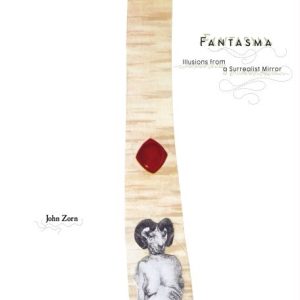 John Zorn’s compositions for classical soloists with rhythm section are among the most successful and powerful meetings of classical and jazz ever conceived — completely notated virtuosic scores for classical players augmented by improvisers who illuminate the music with surprise, support, and an imaginative unpredictability.
Mining this magical world since 2010, the project reached its apotheosis in the acclaimed 2021 release Heaven and Earth Magick. Here that same quartet divides into different groupings to present a varied and dramatic program of new music at its complex, mischievous best. Joined by electronic wizard Ikue Mori on one track, Fantasma — Illusions from a Surrealist Mirror is an endlessly imaginative and compelling new…
 British pianist and composer Alexander Hawkins is one of Europe’s most innovative pianists, working in a variety of creative contexts and always constructing a unique sound world.
As a style-defining and imaginative voice in contemporary jazz, Hawkins provides further testimony to the art of his solo playing, six years after his last solo album (Intakt #330).
Song Unconditional is as playful as it is intense – firmly rooted in tradition, yet endlessly searching and adventurous.
Each of the 13 short pieces explores one or more expressive possibilities of the piano and are, in the words of Adam Shatz in the liner notes, “…marvels of compressed exploration.
To listen to them in succession, as they’re meant…
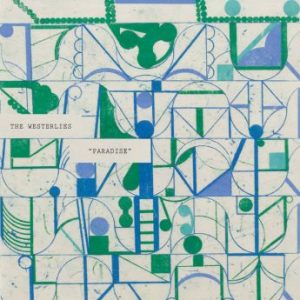 Paradise, the exceptional new recording by The Westerlies brass quartet, comes at a perfect time in history. The music — sublime, precise and deeply spiritual — serves as a balm for the soul during a worrisome era. While the headlines scream of the starving of Palestinians in Gaza, the killing of Jews in Washington, D.C., the upheaval of international trade wars and the persistent sowing of divisiveness, The Westerlies turn their mighty clarion sound to the Sacred Harp music of the American South dating back to the mid-1800s. They have reshaped, recast and elevated this choral music — named for The Sacred Harp, a shape-note songbook from 1844 — into something that’s beautifully soothing and timeless. Let’s start with two stellar guest spots on this…
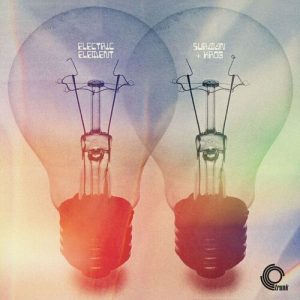 There’s an ineffable sense of mystery to this collection of previously unreleased material from saxophonist John Surman and vocalist Karin Krog. Recorded over three days in 2013, abandoned when the theatre project it was commissioned for never came to fruition, and finally unearthed by Trunk Records, Electric Element sees the duo (along with Surman’s son Ben) abandon traditional jazz entirely in favour of a set of wonderfully weird vocal and electronic experiments.
Over nine tracks – five substantial compositions and four brief interstitials, which mainly act as codas to the longer pieces – Surman shirks his sax in favour of wind synth, bass and contrabass clarinet, plus various effects units. Krog, for her part, shrieks, growls, mutters, and…
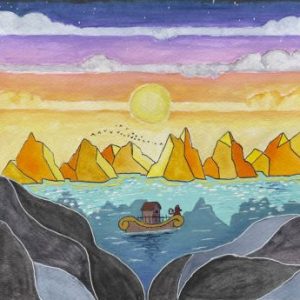 With Early Waves, Chicago drummer Peter Manheim emerges not just as a sideman with range, but as a sonic architect capable of designing entire musical ecosystems. A follow-up to 2023’s In Time EP, this debut full-length expands his vision into something vast yet intimate, drawing from his roots in jazz and global percussion while also stepping boldly into electronic textures and ambient dreamscapes. Early Waves reflects Manheim’s time living in Chicago, Brazil and NYC; the result is a record that resists strict genre labels.
Opener “Early Waves” sets the tone with a shifting tide of synth pads, cymbal textures, and unhurried melodic development, giving the listener hints of Jorge Ben and Caetano Veloso mixed with jazz exploration. But it’s “Joy” that brings…
 It is rare to describe an audio recording as brave, but that is precisely what the latest release by the Silke Eberhard Trio is — bold, fearless, and unflinchingly original. Being-A-Ning, the group’s fifth album, borrows its title from Thelonious Monk’s “Rhythm-A-Ning,” nodding to the jazz giant while continuing the trio’s thematic naming convention. Previous albums — Being (2008) and What a Beauty Being (2011) on Jazzwerkstatt, followed by The Being Inn (2017) and Being the Up and Down (2021) on Intakt — have all explored the elusive nature of ‘being’ through fearless improvisation and sharp compositional ideas.
Eberhard, an alto saxophonist known for her expressive tone and adventurous spirit, pens nine of the album’s ten compositions.
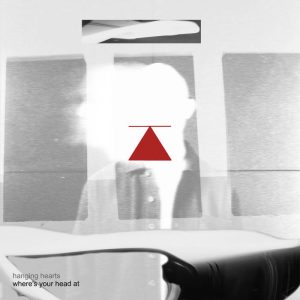 Hanging Hearts is a powerhouse bass-less trio from Chicago led by saxophonist Chris Weller and featuring Cole DeGenova on keys and synths, with Quin Kirchner replacing Devin Drobka on drums. They’re technically outstanding, but it’s their soulfulness and energy that make their music feel fresh and instantly likable. Where’s Your Head At is the unit’s third album.
The stunning opener, “Rise”, kicks off with strident determination, propelled by a powerful synth riff and engagingly misplaced drum accents. It quickly shifts into a section in seven, where Weller’s saxophone lines turn incisively witty. The vitality of punk rock fused with the carefree spirit of free jazz creates a raw musical energy, yet the trio crafts a different finale with Coltranean…
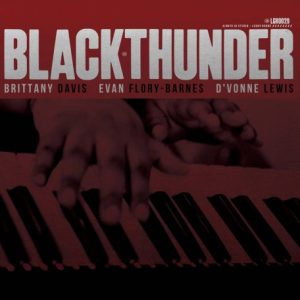 Seattle-based pianist, singer, and songwriter Brittany Davis released Image Issues, their debut on Stone Gossard’s Loosegroove, in 2024. It earned national attention from NPR to World Cafe to Good Morning America for its emotional power in familiar musical forms.
Black Thunder delivers different musical and production aesthetics. Davis is a fine pianist with a command of jazz, soul, gospel, and blues chops. With producer Josh Evans, bassist Evan Flory-Barnes, and drummer/percussionist D’Vonne Lewis, Davis improvised both lyrics and music in two days, emerging with Black Thunder, an album that exists somewhere between the styles of Nina Simone, Rahsaan Roland Kirk, and Roberta Flack.
The set opens with the short, first part of…