
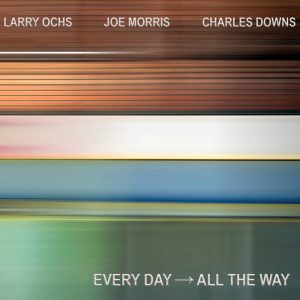
 Saxophonist Larry Ochs teams up with Flow Trio’s rhythm section — bassist Joe Morris and drummer Charles Downs — for this fully improvised session. Despite the trio never having played together before, they generate moments of noisy frisson, though not enough to make the material truly memorable.
From the outset, they push toward the ‘outer’ limits, frequently skirting the aggressive edge of sound in a freewheeling display of musical camaraderie. The opening track, “Yay-Hidee-Yonk-Yoh”, is high-caliber, shifting from a layered blend of bowed bass, sweeping sopranino phrases, and fluid drumming into a more grounded interplay of bass pizzicato, low-pitched tenor, and awkwardly marching drum patterns.
You need to be logged in to view the rest of the content. Please Log In.
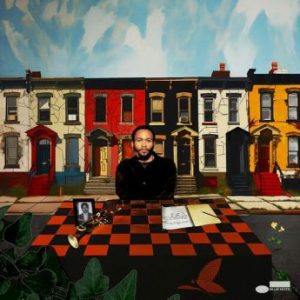 Trumpeter Brandon Woody crafts a heartfelt and soulful homage to his hometown of Baltimore with his 2025 Blue Note debut, For the Love of It All. The album features his close knit band UPENDO with pianist Troy Long, drummer Quincy Phillips, bassist Michael Saunders. The group, whose name is a Swahili word for love, have been playing together since at least 2017, the year Woody moved back home to Baltimore after dropping out of the Manhattan School of Music. Prior to that, the trumpeter had been on an artistic ascent, beginning with his early years studying jazz at the Eubie Blake National Jazz Institute and Cultural Center, the Baltimore School for the Arts and the Peabody Institute at Johns Hopkins University. He also spent a year mentoring with trumpeter…
 Philadelphia’s Pieces of a Dream hold a unique place in the contemporary jazz pantheon. Co-founded in 1976 by high school classmates Curtis Harmon (drums), James Lloyd (keyboards), and Cedric Napoleon (bass), they chose their name after Stanley Turrentine’s reading of Michel LeGrand’s “Pieces of Dreams.” The band was discovered by saxophonist and fellow Philadelphian Grover Washington, Jr., who signed them to Elektra. He produced and played on their eponymous debut album. It charted at Jazz and R&B and made the Top 200. Since then, 18 more of their albums have placed on various charts. They have been an international touring sensation since 1982. While Napoleon left the trio in 1990, he remained close to his former bandmates.
 Between 1980 and 1982, Art Pepper played with Bulgarian pianist Milcho Leviev alongside bassist Tony Dumas and drummer Carl Burnett. Leviev was a music director and pianist with Don Ellis and spent seven years with Billy Cobham. This group backed Pepper on his very first European tour. They initially played a triumphant fortnight stand in London at Ronnie Scott’s. (Those gigs were released in the box set Blues for the Fisherman, in 2010.) An Afternoon in Norway: The Kongsberg Concert picks up the afternoon after the Scott’s residency ended at 1:30 a.m. — the quartet performed just 123 hours later as the closing act at Norway’s Konigsberg Jazz Festival. Laurie Pepper, Art’s widow and curator, teamed with Zev Feldman, the Kongsberg Jazz Festival archives,…
 “Underground” is a relative term. One could argue that all the ‘60s San Francisco psychedelic bands were underground, because the music they made was so far removed from the pop and rock sounds that came before them. But of all the bands in the scene, Lamb was perhaps the most underground of them all. It wasn’t just that their blend of rock, folk, classical, country, blues, and gospel was as hard to classify as any of the era. It was also their vibe.
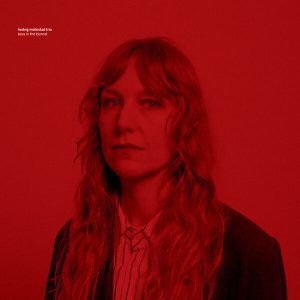 Bees in the Bonnet kicks off with powerful riffing reminiscent of ’70s/’80s hard rock and metal. Veteran guitarist Hedvig Mollestad has always had one foot in the world of these no-nonsense grooves as well as European free improv and progressive rock.
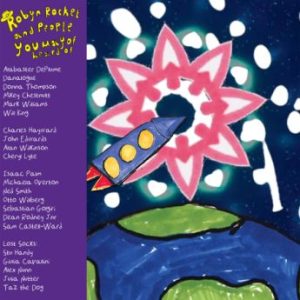 What happens when you bring together familiar faces at London experimental music venue Café OTO, Charles Hayward (drummer Abstract Concrete, This Heat) and John Edwards (double bass), and the Total Refreshment Centre (hub of new london jazz scene recording studio) like Alabaster DePlume (singer and saxophonist) and Danalogue (synths from Soccer96, The Comet is Coming), and the learning disability autism art scene like singers/spoken word artists Sebastian Golgiri and Dean Rodney Jnr (Fish Police), on a magic carpet with space trumpeter
  Drummer
  When
When  Voices on
  The Scandinavian project Arcanum brings together four artists all well-known to followers of music at ECM: Arve Henriksen, Trygve Seim, Anders Jormin and Markku Ounaskari. They’ve played together in many permutations over the years, but this is their first album as a quartet. Already hailed as a “Nordic supergroup” in some quarters, the designation hardly conveys the thoughtful, reflective quality of the improvising and the sensitivity of the interaction here, whether playing music composed in real time or taking a written theme to new places.