
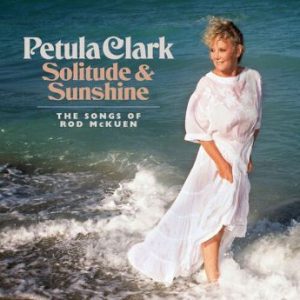
 …For this reissue, the tracklist has been expanded by six previously unreleased recordings of McKuen songs (including “If You Go Away”) and includes two more duets with the songwriter.
British pop icon Petula Clark puts her distinctive stylistic stamp on the songs of poet/songwriter Rod McKuen with Solitude & Sunshine: The Songs of Rod McKuen. Close friends since they first crossed paths in France in the 1960’s, Clark and McKuen long planned to work together, but it wouldn’t be until 2005 that their busy schedules lined up. Originally released in 2007 (and re-released as an expanded edition in 2025), Solitude & Sunshine is a lovingly produced collection that finds Clark singing some of McKuen’s best-known songs. These are nicely arranged performances with…
Latest Entries »
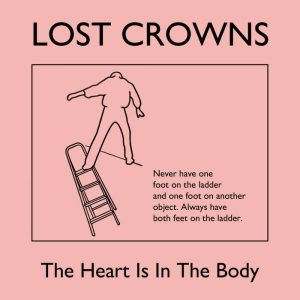 Following a pandemic-era Zoom call in which several traditional British folk musicians attempted to play together but fell out of sync, Lost Crowns main man Richard Larcombe was supposedly inspired to pick up instruments he’d never played before – fiddle, harp, tin whistle, concertina and English border bagpipe. The resulting recording stakes a serious claim to being the most exciting, most advanced music of its kind. The caveat being that there are few other artists who have even attempted to sound like this – and some listeners might well consider the entire enterprise a kind of monstrous folly to begin with.
The eight songs contained within this album are not entirely without precedent. One might consider Lost Crowns to be akin to a wilder…
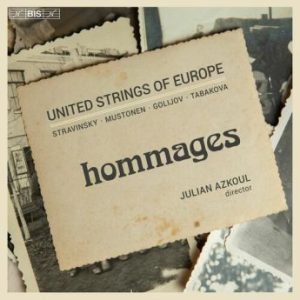 Hommages is a splendid addition to the four earlier recordings by the United Strings of Europe (USE) on BIS, with its latest augmenting works by Dobrinka Tabakova (b. 1980), Osvaldo Golijov (b. 1960), and Olli Mustonen (b. 1967) with Igor Stravinsky’s neo-classical ballet Apollon musagète. The collection makes good on the London-based company’s mission to combine the new with the familiar and to experience the latter in a different way. That applies in this case to the Stravinsky work, which appears here in a new arrangement by the ensemble’s artistic director and lead violinist Julian Azkoul. On the sixty-eight-minute release, the USE pays homage to the great Russian but also fellow twentieth-century composers Carlos Gardel and Astor Piazzolla.
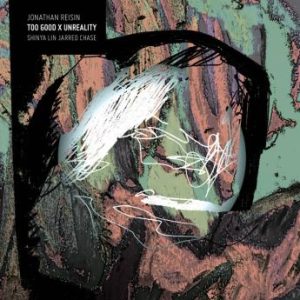 With his fourth album as a leader/co-leader, Too Good X Unreality, Israeli-born, Brooklyn-based saxophonist Jonathan Reisin reaffirms the strong impression left by his debut, Option B (2022), as well as by Earthquake (2023), which featured him alongside his mentor, the creative Cuban drummer Francisco Mela.
As a firm representative of a young generation of contemporary avant-gardists, Reisin tackles compositions that require sharp improvisational insight. For this recording, he spearheads a bass-less trio featuring pianist Shinya Lin and drummer Jarred Chase, centering on the connection between complexity and simplicity in music.
“Walk and Talk” proceeds at a casual pace yet crackles with excitement. A brittle soprano…
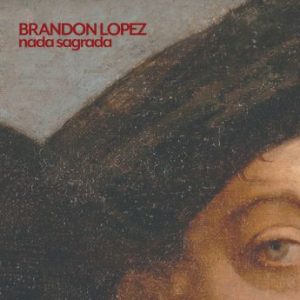 Nothing sacred. That’s what the title of this fiery feat of improvisation means in English. It’s a fitting moniker, one that reflects the current state of the world and the incredible uncertainty brewing within the global military and economic powerhouse. As free speech, due process and the rule of law disappear, it’s clear that there isn’t much that is sacred anymore. This situation is centuries in the making, however. The eye of Christopher Columbus peering from the CD sleeve is a stark reminder that violence, oppression, and the lust for power are timeless “features” of human society. Before a note of music sounds, Brandon Lopez is making a political statement with Nada Sagrada; it is both loud and clear.
As a bassist, Lopez defies the sacred conventions…
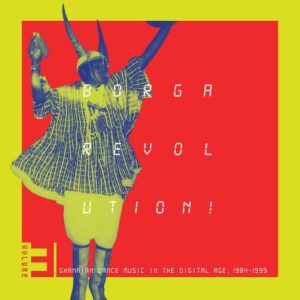 Kalita present the third volume in their ground- breaking ‘Borga Revolution!’ compilation series, exploring the revolutionary phenomenon of Burger Highlife. This unique style fused West African melodies with synthesizers, disco, and boogie, a sound that took Ghanaian airwaves by storm in the 1980s and beyond. With previous volumes receiving strong support by tastemakers such as Gilles Peterson, Antal, Tom Ravenscroft, and Hunee, Volume 3 takes a deeper dive than ever before into the world of Ghanaian digital dance music.
This volume features rare, sought-after tracks from artists including Obibini Takyi, Osei Banahene, and Okyerema Asante, as well as Burger Highlife trailblazers George Darko and Lee Dodou. Borga Revolution! Volume 3 offers a curated…
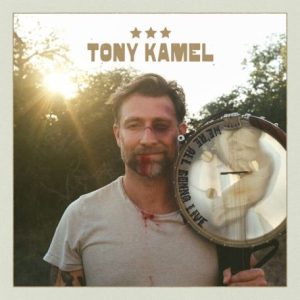 Do you remember that suicide poem, “Resumé” by Dorothy Parker? The narrator lists the various ways one might kill oneself and concludes they are all too messy, unpleasant, or just plain dull.
“You might as well live”, the speaker wearily concludes. Tony Kamel’s new album features a host of songs about death and dying, but unlike Parker, he deduces, “We’re All Gonna Live”, so we should enjoy it.
Kamel attributes his optimism to his grandmother, who advised him, “Eventually, life starts to knock you around. You have to be ready to fight with a smile.” The country/bluegrass singer/multi-instrumentalist takes this instruction to heart. He knows life can suck, but one can also suck the sweetness out of it in a positive manner.
 On first listen, Safe Travels immediately makes a good impression. It’s an immensely well-crafted follow-up to their 2021 album, Hunter. For those well acquainted with Hunter, that first listen reveals a comforting familiarity, starting with the same style of rustic packaging for the CD, complete with Christina’s hand-printed illustrations, no plastic to be found here. Musically, the couple’s spine-tingling vocal harmonies again overlie arrangements that exploit their expertise on an impressive range of instruments. These two strands combine in a sound that, while familiar, rapidly delivers unexpected treats. Instrument-wise, only the cello, played by Alex on Hunter, doesn’t get a repeat outing. However, its absence is very much offset by John Parker‘s super-sensitive…
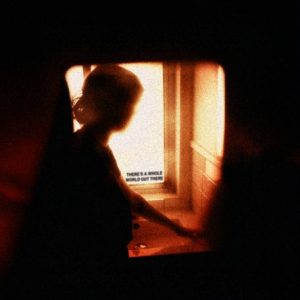 Maybe there’s something in the cold air that makes it easier to unleash emotions. Emo group Arm’s Length, from Ontario, certainly have no problems in this regard. Though they aren’t a household name, if you visit the right subreddits, they’re surely a sensation — these fans in the know are aware it’s only a matter of time before the band breaks out. There’s a Whole World Out There is the four-piece outfit’s second release, coming off the tail of touring and struggles with mental illness. Lyricist and vocalist Allen Steinberg poured his heart, soul and blood into this release alongside the rest of the quartet. With killer riffs and unique instrumentation from brothers Jeremy and Jeff Whyte and Ben Greenblatt, Arm’s Length has made a fantastic record that pop punkers and…
 Workers Comp raises a raucous, twanging ruckus on this self-titled debut, spitting home-spun poetry about dead-end jobs off the back end of a bucking blues-vamp. Disappointments are rife, the struggle is real, but it’s always music o’clock somewhere, and that’s something to celebrate.
A stripped-down trio, Workers Comp marshals the talents of Deadbeat Beat’s Joshua Gillis on guitar, Luke Reddick of Divorce Horse on bass and Ryan McKeever of Staffers on drums. Fair warning, however, the new band sounds not much at all like any of its three predecessors. Instead, it evokes the humorous wallop of the Strapping Field Hands, and the drunken rave-ups of Hootenany-era Replacements. This country viewed through a cracked mirror, amped up and…
 …Cheaper Than Cheep was recorded on June 21, 1974 at a rehearsal studio on Sunset Blvd. in Hollywood, where Zappa was joined by a Mothers of Invention line-up including Chester Thompson (drums), George Duke (keyboards, vocals), Jeff Simmons (guitar, vocals), Napoleon Murphy Brock (tenor sax, flute, vocals), Ruth Underwood (percussion), and Tom Fowler (bass). Zappa enlisted a film crew with multiple cameras to capture the intimate performance, while Wally Heider’s mobile truck outside handled the audio with Zappa associate Kerry McNabb engineering. The title is derived from Zappa’s crack at the beginning of the show that it was “cheaper than cheap” – a nod to the fact that he self-funded the concert on a tight budget. Ever the taskmaster,…
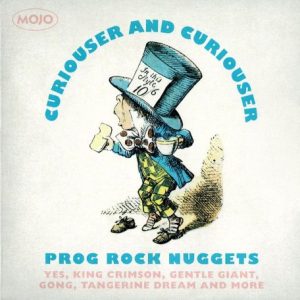 1. Gentle Giant – Proclamation
2. Yes – Long Distance Runaround
3. Crack The Sky – Hold On
4. Gong – Occupy
5. Ithaca – Journey (Destruction – Rebirth – Patterns of Life)
6. King Crimson – The Night Watch
7. Tangerine Dream – Raum (Edit)
8. Henry Cow – Amygdala Extract (Demo)
9. Peter Bardens – The Answer
10. Zior – Every Inch a Man
11. Gryphon – Second Spasm
12. Djabe & Steve Hackett – Hairless Heart
13. Samurai – Saving It Up for So Long
14. Lady June – Tunion
15. Jade Warrior – Snake
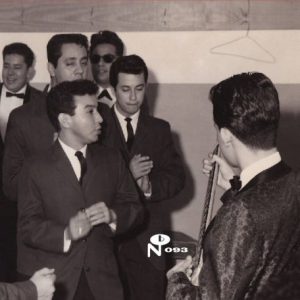 Numero Group’s terrific Eccentric Soul series are studies in early soul, rock and roll, R&B, and pop, much of which is obscure and largely forgotten to time. The most recent installment of the series showcases the Cobra Records label, an establishment founded in San Antonio by Abraham “Abe” Epstein, sometime record producer and real estate mogul.
As is Numero’s wont, The Cobra Label is a finely-packaged double LP with extensive liner notes featuring label and band histories and ephemera. And the music herein is a wonderful overview of Cobra’s oeuvre. Beginning with Sonny Ace & The Twisters’ take on “Wooleh Booleh,” The Cobra Label runs through 28 tracks, from the label’s 1961 debut release, The Royal Jesters with…
 Pianist Nicoletta Favari and percussionist Christopher Salvito, known collectively as Passepartout Duo, thrive on creating works derived from unique instruments and processes. Their previous full-length releases, Vis-à-Vis (2020), Daylighting (2021), and Circo Pobre (2022), derived from original concepts that translate into music that excites, inspires, and transcends. It’s experimental music in the truest sense of the word, but also manages to be truly enjoyable and oddly melodic. For their latest, Argot, the concept may be complex to get a handle on, but the results are deeply satisfying.
Described on Bandcamp as “a deep investigation on how we communicate and collaborate with electronic devices… a reinterpretation of…
 Is trip-hop as a genre (or subgenre) still around in any shape or form? Well, maybe not by name it is not mentioned much, but in concept and spirit it seems to be, particularly if you consider the new album by London guitarist, producer and multi-instrumentalist Sheldon Agwu and what he has come up with on his latest album Kintsugi.
Agwu, who has previously worked with the likes of Jordan Rake and Bonobo, among others and has worked as musical director and house band guitarist for established London venues such as Jazz Cafe, XOYO, Unit 31 and NT Loft, has been coming up with solo projects since 2021 (3 EPs), seems to be mainly immersed in how to creatively strike a balance between live instrumentation with electronics and hip hop rhythms.
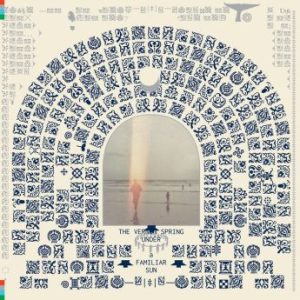 Sam Beste has played with Amy Winehouse, Beth Orton, and MF Doom, but as the Vernon Spring, the British pianist-composer-producer takes a more experimental route.
On his second album, Under a Familiar Sun, Beste layers, loops, and strings together field recordings, vocal samples, spoken word, and spare piano melodies, forming an allusive/elusive collage. Beste keeps things short — the album’s 12 tracks average about three minutes in length, but the collision of widely different elements can often make each piece seem like several songs superimposed over each other. The rampant multiplicity never feels schizophrenic or jarring — the tracks often run together or float into each other, with sparse motifs recurring throughout.
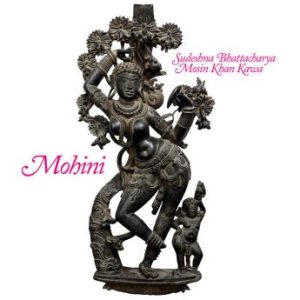 Norway-based Sudeshna Bhattacharya is one of very few female sarod players, having begun training aged just eight, initially with her father, and later with one of the biggest names among sarod maestros, Amjad Ali Khan. Unlike the sitar, the sarod, (descended from the Afghani rabab) is unfretted, hence more difficult to play but offering a greater flexibility in exploring the many microtonal nuances of Indian classical music.
On the album Mohini (feminine equivalent of the Hindu god Krishna), Bhattacharya, accompanied by tabla player Mosin Khan Kawa presents three ragas, starting with an exquisite ‘Bhimpalasi’, a hugely popular afternoon raga. She goes on to raga ‘Hamsadhwani’ which has its origins in South Indian (Carnatic) classical music.
 Singer, songwriter, and producer Cautious Clay has become mysterious in the modern music pantheon. His list of songwriting/producing credits is brimming with A-listers, and each addition’s solo discography is becoming more impressive and expansive. What started as an earnest career for an R&B hopeful quickly became a colorful exploration of the human experience set to a range of pop balladry and freeing takes on modern jazz. Clay seems only to be getting started. On April 16, the artist released The Hours: Morning, a quick yet emotionally dense look at Clay’s pop prowess and his ability to craft infectious, poetic pieces of modern music.
These eight songs are a far cry from Clay’s KARPEH LP, his 2023 release that saw the artist…