
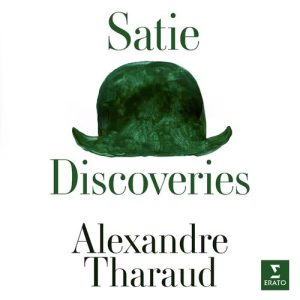
 To know Erik Satie a century on from his death is likely to know either Trois Gymnopédies or the later Gnossiennes. Amid the progressive milieu of fin de siècle Paris, Satie brought a clarity through simplicity (though not, it should be pointed out, ease) that cast aside centuries of escalating compositional excess running hot in the blood of contemporaries like Wagner, Strauss, Mahler and Rimsky-Korsakov elsewhere in Europe. Each of Satie’s series were harbingers of the coming century, belatedly credited in some circles as the origin of modern ambient music. As Dutch conductor and professor Reinbert de Leeuw once observed, “Satie was, in a manner of speaking, starting European musical history all over again.”
Interestingly, though, Satie wasn’t a radical in…
« Cory Weeds & Jerry Weldon – Cory Weeds Meets Jerry Weldon (2025) Aho Ssan & Resina – Ego Death (2025) »