
 Those struggling with anxiety or depression will find that Pacing, the project of San Jose-based songwriter Katie McTigue, makes embarrassingly relatable music. Often, it can feel like a soundtrack to accompany the running chatter in your brain. Even if you’re not anxious, you’ll find plenty to enjoy on Pacing’s latest LP’s PL*NET F*TNESS, due to its chaotic sonic nature, broader themes and quirky, upbeat sense of humor. At 12 songs in less than 30 minutes, this follow-up to Pacing’s strong 2023 full-length album debut, Real poetry is always about plants and birds and trees and the animals and milk and honey breathing in the pink but real life is behind a screen, will not disappoint, despite McTigue’s attempts to prove the contrary in her opening track.
Category: indie
 Fabio Mina uses his flute as a playground.
The Rimini-born musician’s compositions grow from improvisations on his instrument that flit from ruminative melodies to breathy rhythms to dance beats. With Existence / Resistance, made in collaboration with producer Manuel Volpe, Mina presents a survey of his genre-blending, exploratory style in ten compositions inspired by the current of wind and the ideas of freedom and resistance. It is, at its heart, a showcase of the many different textures and techniques possible on the flute in conversation with techno-ambient electronics.
Existence / Resistance comes at a time in which the flute is reaching peak popularity. Andre 3000’s oft-discussed new age flute album…
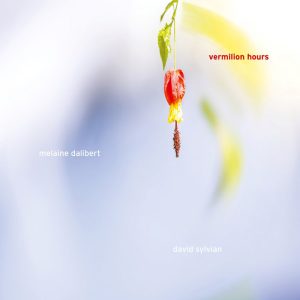 Scattered notes seem to stretch time, their repetition and countless combinations evoking (or invoking?) the infinite iridescence of light that accompanies dawn — a ritual as inevitable as it is unpredictable. With his Musique pour le lever du jour, composed over two years and completed in 2017, Melaine Dalibert once described his aim as creating “an infinite piece,” without beginning or end. Subtle, intangible, both complex and minimal, the variations forming this hour-long composition — dedicated to Belgian pianist Stéphane Ginsburgh — allowed silence and resonance to blossom into shades of color.
Released on the American label Elsewhere Music, led by Yuko Zama, the album was ranked among France Musique’s 100 best of 2018.
 …the Oregon-based oddball’s 21st album Love & Ponystep combines two things that might seem diametrically opposed: cute ponies and crazed wubs. But this music is so clever and so admirably unhinged, it’ll hook more than just the bronies and the brosteppers.
At the core of Zelda Trixie Lulamoon’s work is a love of subculture in all its glory and garishness, and on a deeper level, the winding route to self-acceptance. Love & Ponystep is an ode to internet ephemera and cringe culture, yes, but it’s also memeing as a defense mechanism, fantasy as allegory for things too uncomfortable to say openly. In a 26-page lyric booklet, Lulamoon credits part of her inspiration to a breakup, an experience mirrored in the narrative of her…
 The shadow cast by Tricky is a long one. But beyond the raspy, roach toke vocals, what does a Tricky tune look like? What shape does it take? It’s hard to say. You can point to the downtempo bass and murk, but that foundation leaves you with plenty of room to roam. His spirit can be felt in Dean Blunt and Inga Copeland, Tirzah and Coby Sey, Young Echo and Space Afrika. The list goes on.
More than one of these artists show up on All Our Knives Are Always Sharp, the latest album by the British Nigerian self taught musician Tony Njoku. Indeed, Tricky himself appears on the track ‘Depleted’, connecting the sonic dots, an extended school of slouched shapeshifters.
That diffuse lineage can be heard on the record, but the textural fog is punctured by a sense…
 Remastered from the original tapes by Matt Colton.
After releasing Sabresonic, the Sabres of Paradise decided to give their sound a facelift. The trio of Andrew Weatherall, Jagz Kooner, and Gary Burns set aside the surprisingly straight-ahead techno sounds of their previous work and shot off into a variety of directions, adding trip-hop, speaker-rattling dub, spy themes, library music, and lopsided funk to the mix on Haunted Dancehall.
It’s a gritty, constantly surprising record that displays more of the genre-smashing appeal of Weatherall’s remix work and along the way invents noir techno. It started life as something of a concept album with liner notes by Irvine Welsh detailing the outlines of the story. Though the group replaced his work, the idea is still…
 Remastered from the original tapes by Matt Colton.
Sabres of Paradise‘s debut album, Sabresonic, established the trio’s club bona fides in spades, whether that club was an all-night rave, a sweaty bar with crummy speakers, or a chill-out room. Andrew Weatherall, the most well known of the group, had already established himself as a trailblazing remixer, and this record felt like his calling card to be a dues-paying member of the techno club. He, Jagz Kooner, and Gary Burns whipped up numerous tracks that rolled well past the five-minute mark, underpinned by thumping drums, thunderous sequencers, and sleek synths. The opening “Still Fighting,” a reclaimed bit of club nirvana that was meant to be a remix of a Primal Scream track, sets the stage, and…
 The Warlocks return with their 14th studio album The Manic Excessive Sounds Of. The band are led by the irrepressible Bobby Hecksher, and have become foundational within the 21st century outer-national psych community. Melding together lysergic songwriting with aspects of shoegaze, indie, and beyond, The Warlocks are now 25 years – and counting – since influential debut ‘Rise & Fall’.
‘The Manic Excessive Sounds Of’ finds The Warlocks grappling with fresh ideas. Continually evolving their sound, there’s an increased use of acoustic guitars, added to some nimble single line lead that recalls The Feelies. A counter cultural force, the band’s excesses have led to the palace of wisdom – now working in a more intentional manner, The Warlocks remain hugely impactful.
 Over the past two years, Kaique Vieira, AKA DJ K, has been crafting a new sound of São Paolo. Influenced by local favela street parties, the 24-year-old producer takes the distorted bass, Afro-Brazilian rhythms and vocal melodies of baile funk – a dance genre that originated in Brazil in the 80s – and adds a darker palette of reverb-laden vocal lines, rave sirens and buzzing synths to create a style he calls bruxaria (witchcraft). Vieira’s 2023 debut Pânico no Submundo was a 15-track introduction, harnessing the sound of blown-out speaker cones. Radio Libertadora! moves into even bolder and louder territory, developing his nascent genre into a source of dancefloor chaos.
Opening with a sample of a 1969 radio speech by the revolutionary Carlos Marighella, which…
 Rosali makes songs that take their time in revealing their full power. What might appear to be restrained, introspective compositions will stretch slowly outward, snagging your attention with a sideways guitar lead or an exceptionally raw lyric you didn’t catch the first time around. Her softly glowing music is deceptively fluid, able to appear patient and refined at the edge of unraveling.
Slow Pain: Live and Solo from Drop of Sun captures an intimate performance of eight tracks from Rosali’s acclaimed 2024 Merge debut Bite Down and standalone single “Hey Heron.”
Recorded April 23, 2025, at the vaunted Drop of Sun Studios in Asheville, NC, these recordings go beyond showing the bones of Bite Down. Pared down to Rosali’s voice and guitar and performed…
 Following on from the cleverly connected titles of songwriter Karl Frog’s first two albums — I Love Music and Why Music? — his third release Yes, Music, finds him firmly returning to a more affirmative approach. This collection of 11 songs, all in a similar vein to his previous work, taps into a myriad of influences, while so distinctively remaining as a whole. Frog, a Canberrian / Estonian, has worked as an office assistant, a printer technician, a teacher and a baggage handler. In his spare time, he is an amateur musician. Tinkering away at bedroom recordings and stumbling across melodic gems as he goes, Yes, Music is an eclectic album, channeling everything from new-wave, modern jangle, synth pop, and even some slight baroque influences.
 Four years have passed since T. Hardy Morris — former member of Dead Confederate and Diamond Rugs — released his last critically acclaimed solo album, The Digital Age of Rome. He didn’t rush into a follow-up, but instead took his time, carefully considering what he wanted to express. The result is Artificial Tears, a record steeped in introspection and deliberate self-examination.
The result is a dozen lo-fi indie rock tracks that focus on identity and searching for meaning delivered through poetically cryptic lyrics that recall everyone from Michael Stipe to Leonard Cohen. On “Don’t Kill Your Time (To Shine)” one of the album’s early singles, Morris offers a plea for the listener to not worry about what others think, delivered over an echoey, dreamy soundtrack…
 Industrial music legend Chris Connelly returns to his first love with White Phosphorus (Chris Connelly plays Throbbing Gristle), a suitably uncompromising homage to the “random, tense, scary & compulsively fascinating” phase of industrial music’s catalysers and ur-agitators. Having carved a twisted career with behemoths Ministry and Revolting Cocks over the past 40 years, starting life with the formidable Fini Tribe and collaborating with disparate characters such as Killing Joke, Cabaret Voltaire, Jim O’Rourke, and too many others, Connelly has returned armed with nothing but a cassette recorder, a reel to reel, a razor blade and some tape.
The Scottish-born musician first discovered Throbbing Gristle through their…
 Mount Eerie’s Phil Elverum has dug into the archives for a new album. GIANT OPENING MOUTH ON THE GROUND is a collaboration with Washington experimentalist Arrington de Dionyso. Elverum and de Dionyso previously played together in the experimental band Old Time Relijun.
…Though this is its first release, the 33-minute album dates back more than a decade. It was recorded in 2014, and the story stretches back even further. “Around 2010 I made this self-playing loud sculpture by connecting a giant gong (48″) to a giant subwoofer (2×18″) via a contact mic, a crossover, and a powerful amplifier,” Elverum explained on Substack. “I don’t do much besides find the frequency where it wants to resonate infinitely and let it go. I like the opportunity…
 Learning Greek opens with the most almighty bludgeoning affair, where the post-hardcore, mosh-pit-triggering tirade that is ‘Neighbours’ finds Humour telling a rather gloomy tale – that of our protagonist in a paranoia-induced state, believing that malevolent beings are out to get them. This debut sees the Glasgow outfit departing somewhat from their early art-punk, hinting at more crossover appeal.
It’s an album that features some of its most interesting works in its latter half – the caustic post-punk of ‘I Knew We Would Talk’, for example, or ‘Aphid’, which meanders between grunge, motorik goth-rock and noise, with sinister sci-fi stylings. ‘Memorial’, meanwhile, flirts with pop-punk to be the kind of pint-spiller…
 In 1995 In The Red released the Cheater Slicks fourth full length album, Don’t Like You. The band, based in Boston at the time, travelled to New York to record at Jerry Teel’s Funhouse studio with Jon Spencer acting as producer. The result was a completely over the top noisefest that remains one of my favorite ITR releases to this day. Admittedly, Jon’s production was heavy-handed and extreme but, I thought it suited the band and this material well.
“Prior to the recording the band demoed their material at a couple of different eight track studios in Boston. The demos showed that the band had enough material for an album that would be (in my opinion) their strongest to date. When the album was released it was very well received…
 Although David Grubbs has worked with all of the musicians who join him in Bitterviper, they’ve yet to all gather in a single place. Still, they all seem highly attuned to what one another does.
The quartet’s eponymous debut was produced through file sharing, an accretive process set in motion by lush, often psychoacoustic solo cello lines and patterns played by the Athens-based Nikos Veliotis and subsequently layered with sounds by Grubbs, Japanese electronics master Taku Unami, and percussionist-composer Sarah Hennies. Across four gorgeously contemplative, deeply spacious pieces the ensemble achieves a stunning cohesion, even without considering that everything we hear was produced in four different locales at different times.
 Meeting somewhere between post-punk and techno, electronic body music (EBM) emerged in early 1980s Europe as a darker, sweatier alternative to the more melodic synth music of the time. Made up of militant chants and muscular rhythms perforated with ominous clangs, the genre mostly thrived in goth bars and clubs, except for the odd chart entry from key players such as Front 242. Even 40 years on, EBM still lurks on the fringes of dance music.
Irish producer Autumns is one name championing the industrial club sound through his stormy yet pumping hardware tracks and raucous live sets, which are all flailing limbs and swishing hair behind a tangle of wires. Since starting the project in 2013, he has put out a formidable 88…