
 Remastered and beefed up with an extra disc of archival tracks and unreleased live recordings
Flags of the Sacred Harp is a comeback album of sorts, released after a hiatus in the band’s activity and a lineup reconfiguration that sees the return of Nudge leader Honey Owens and the arrival of guitarist Adam Forkner. The break was beneficial, because this is the group’s tightest, most pleasant album to date. What strikes first is the song orientation: at least five of the seven pieces can be rightfully called songs. That said, fans of the group’s experimental side need not worry.
The 16-minute instrumental “Spirit” aptly illustrates that persona of Jackie-O, while a song like “Nice One” develops into looser sections that surely couldn’t be interpreted as a sellout decision.
Category: psychedelic rock
 Do you put “motherfuckers” in your band name to attract attention or to put a cap on your audience — or, more likely, because such questions could not be farther from your mind? Relatedly, do you drop your debut album on the Fourth of July because it’s such a dead release week and there will be fewer releases competing for people’s attention, or do you choose a holiday exactly because yours is a low-stakes project that does not demand some grandiose rollout? Or, again, are these kinds of questions beside the point of a band like Motherfuckers JMB & Co.?
This is not a band that stinks of strategy. They seem more interested in sending cosmic vibrations into the universe than shockwaves through the industry. Music Excitement Action Beauty…
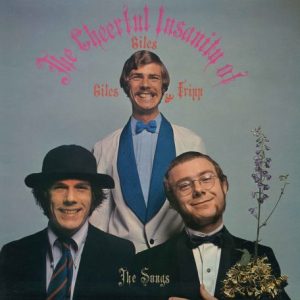 The first standalone release of the songs from Giles, Giles & Fripp’s 1968 debut album, now with spoken word sections removed. New 2025 remaster by David Singleton.
While 1967 is rightly remembered for an abundance of classic albums, there were also quieter debut LPs emerging, signalling popular music’s imminent changes to a more rock-oriented, musician-centred approach.
It was also the year that Robert Fripp applied for a ‘singing organist’ role advertised by brothers Peter and Michael Giles, despite having no experience either as a singer or organist.
Experiencing a few challenges and disappointments on the way, the year was an exciting one for the trio, who recorded a series of…
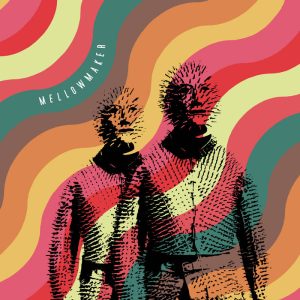 Following 2024’s ‘Wobble’, Mellowmaker is the second chapter in Black Market Karma’s two-part album series on Fuzz Club. Crafted entirely by Stanley Belton—who writes, records, and produces everything himself-the record embraces analogue imperfections and tape wobble, splicing them with modern techniques to create a “cassette-ified” lo-fi psychedelia blending ‘60s pop, ‘90s neo-psych, and crunchy hip-hop breakbeats.
“Mellowmaker was made immediately after Wobble, I kinda see them as two sides of each other”, Belton says. The washed-out saturated vocals and jangling Vox guitars are there, but the in-built fuzz and repeater sounds on his cherished vintage Ultrasonic get some heavier usage here. Synths take more of a back-burner in favour of dreamy…
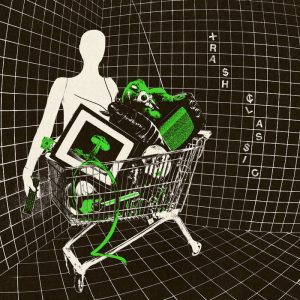 Hooks so infectious they rot on impact. Trash Classic marks a feral mutation for Frankie and the Witch Fingers—a record that snarls with proto-punk venom, angular melodies, and electronic textures that cough and sputter like dying neon lights under a poisoned sky.
This record pushes the Witch Fingers’ sound to a razor’s edge. Wiry and twitching, it bends into synth-punk and fractured new wave, with fragments of industrial grime caked under its nails. Guitars detonate and slice like cinder blocks through glass, while gnashing basslines slither through the sludge, alive and seething. Buzzy synths take the forefront, driving relentless rhythms that crack and pop, drenched in a chemically saturated sheen—part bug-eyed…
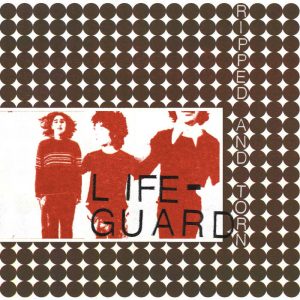 Arriving five years after their debut EP and two years after signing with Matador Records, the appropriately titled Ripped and Torn marks the full-length debut of noisy Chicago trio Lifeguard. Dissonant, malcontent, and relentlessly driving yet unpredictable, it sees the group expand on a web of stylistic influences ranging from noise-rock to punk and no wave, just for starters. The album begins with a pulsing wall of noise on “A Tightwire,” whose racing tempo, churning chords, and crashing cymbals are eventually accompanied by half-incomprehensible sung and shouted grievances made only more ominous by the title of the second track, “It Will Get Worse.” The latter is an “oh-oh”-laden, Ramones-type bop draped in clatter. Songs like the under-two-minute…
 The Budos Band‘s VII marks the nonet’s return to full-length recording after 2020’s Burnt Offering and 2023’s fine Frontier’s Edge EP. It’s their debut long-player on Diamond West, the label created by Budos guitarist/producer Thomas Brenneck and baritone saxophonist Jared Tankel. VII extends the dark psychedelia approach of 2020’s Burnt Offering, but it’s more a vibe than an aesthetic. Instead, BB focuses on extending their stylistic reach with sophisticated horn charts — played by Tankel, trumpeters Dave Guy and Andrew Greene, and trombonist Ray Mason — framed by incendiary percussion from ace drummer Brian Profilio and newcomer percussionist Rich Terrana (ex- Frightnrs). It’s texturally and ambitiously buoyed by the rhythm section that includes…
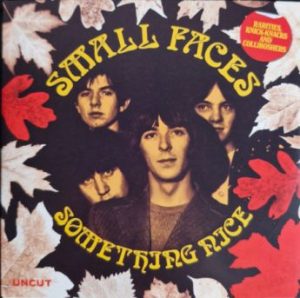 …The 11-track album Something Nice includes rarities, alternate takes and live cuts, including a set of tracks from the new deluxe edition of The Autumn Stone.
This slew of rare Small Faces goodies is largely pooled from Kenney Jones’s recently revived Nice Records. “I started the label in the ’90s to raise money for Ronnie Lane when he had multiple sclerosis,” Jones tells Uncut. “I put it to bed after he died, but have since thought, ‘No, I want to do something with this.’”
The first Nice release was 2021’s Live 1966, an extraordinary document of Small Faces’ two sets at the Twenty Club in Mouscron, Belgium, selections from which comprise the first half of CD. “It was one of the first gigs we’d ever done…
 Somewhere in the ‘60s, the folk movement and the psychedelic rock scene intersected and a new sound emerged combining mellow acoustic sounds with further-out ideas that broke from folk traditions. This psychedelic folk-rock sound was wide-ranging, from the more straightforward sounds of bands like Fairport Convention and early Jethro Tull to the acid-tripping bliss of communal groups like the Incredible String Band.
The Magic Forest is the second entry in a series of compilations that began with 2022’s Deep in the Woods, again collecting artifacts of enchanted, pastoral psychedelic folk from between 1968 and 1975. Cherry Red’s anthologies generally intersperse obscure acts among the better known artists of the genre or topic they’re focused on,…
 Back in late sixties/ early seventies the German take on prog rock was a true novelty, including so many elements from other modern or not so modern musical genres so much so, that some rock critics outside of Germany gave it a seemingly derogatory title of krautrock.
Of course, what turned into a legitimate sub-genre or genre in itself was no joke, as it was utterly innovative, constantly changing and evolving, and bringing in artists new and old within its fold.
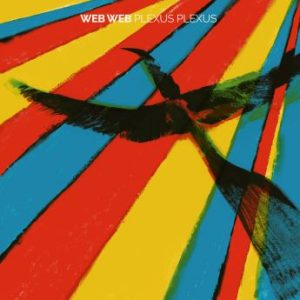
This is where a Munich, Germany conglomerate that calls itself Web Web comes in with their latest offering Plexus Plexus (its sixth in seven years) with its take on krautrock that includes elements both new and old.
It turns out that this was a two day, mostly…
 Causa Sui returns with the perfect companion to last year’s tour de force, From the Source. Whereas that record was a tightly structured piece of work, that condensed many aspects of the band’s sound into a concise 45 minute LP, In Flux presents the more loose and impulsive side of Causa Sui. After an introductory suite in classic Causa Sui territory, with deep fuzz riffs and syncopated grooves, things gradually become more outlandish. The following three vinyl sides see the band channeling Hot Rats-style jazz fusion, the oceanic post-rock of late-period Talk Talk, and the impulsive, anarchic experimentalism of Can’s ”Tago Mago” into their own beatific brew. On “Spree”, the band abandons guitar entirely, relying on a dual synthesizer on top of drums…
 Electric Junk: Deutsche Rock, Psych and Kosmische 1970-1978 is Cherry Red’s deep dive into the German underground, mainly focusing on rock music but also delving into spacy, abstract electronic sounds. The liner notes make a point to immediately disavow the K word, though it makes the set’s title slightly misleading, as Deutschrock is actually a much more mainstream, blue-collar form of German rock music than the experimental styles lumped together as Krautrock.
The compilers intentionally avoided Can and Kraftwerk, instead shining light on a lot of more obscure acts, yet also making the case that Faust should be regarded as a pop band. The release doesn’t shy away from including lengthy jams, with a righteous Guru Guru cut starting things…